

If there is moss or lichen on your roof before a repaint, removing it properly is the single most important preparation step. Paint applied over biological growth fails quickly, often within one to two years.
Why Moss and Lichen Are a Problem
Moss holds moisture against your roof surface, accelerating paint breakdown and tile deterioration. Lichen etches into tile glazing and paint films as it grows, creating a physical adhesion problem for new coatings. Painting directly over either one seals the organic material underneath, which continues to hold moisture and grow, causing the new paint to lift and bubble within months. Sources: Dulux Trade
The Three-Stage Process
Stage 1: Biocide Treatment
Apply a commercially available biocide or moss killer to the affected areas. Products like Wet and Forget or diluted bleach solutions are commonly used. Allow 24 to 48 hours contact time before moving to the next step.
Stage 2: Pressure Washing
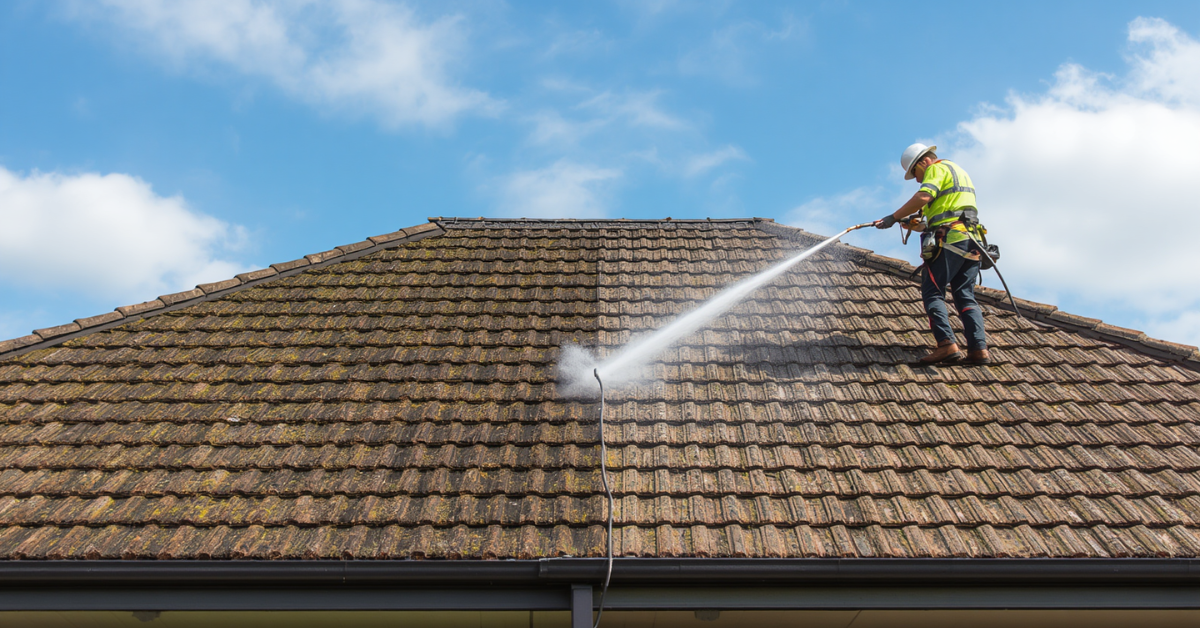
Pressure wash the entire roof surface. Tile roofs require lower pressure than metal to avoid dislodging ridge capping mortar. A professional using a 1,500 to 2,000 PSI machine with the right nozzle distance removes decades of biological growth in a single pass.
[ Screenshot: Pressure washing in progress on a Sydney tile roof ]
Stage 3: Re-treatment and Inspection
After washing and drying, inspect for any remaining lichen. A second targeted biocide application to stubborn patches, followed by hand scrubbing with a stiff brush, handles residual growth before priming.
Lichen: Why It Is Harder to Remove Than Moss
Lichen attaches to the tile or paint surface with root-like structures called rhizines that embed into the substrate. Even after biocide treatment and pressure washing, lichen often leaves a stain or bleached patch on the tile surface. A primer coat over these areas before topcoating reduces the visual effect in the finished job.
How Long Does It Take?
For a standard three to four bedroom Sydney home, the cleaning and preparation stage takes half a day to a full day. Painting begins once the surface is completely dry, usually 24 to 48 hours after washing in Sydney’s climate.
Can Homeowners Do This Themselves?
The biocide application can be done from the ground with a garden sprayer on single-storey homes. Pressure washing on a pitched wet roof is a fall hazard. For most Sydney homes, the safety case for professional cleaning is strong. Sources: SafeWork NSW
Will the Moss Come Back?
Yes, eventually. In shaded areas with higher rainfall, moss can re-establish within a few years. Using a paint with a lichen inhibitor, like Solver Roof Paint or Dulux Weathershield, extends the interval between reoccurrences.
Final Thoughts
Removing moss and lichen properly is not an optional step. It is the difference between a roof paint job that lasts 10 to 15 years and one that starts failing in two.
For what a professional roof repaint involves, visit our roof painting service page. For broader context, our exterior painting guide is a good companion read.