
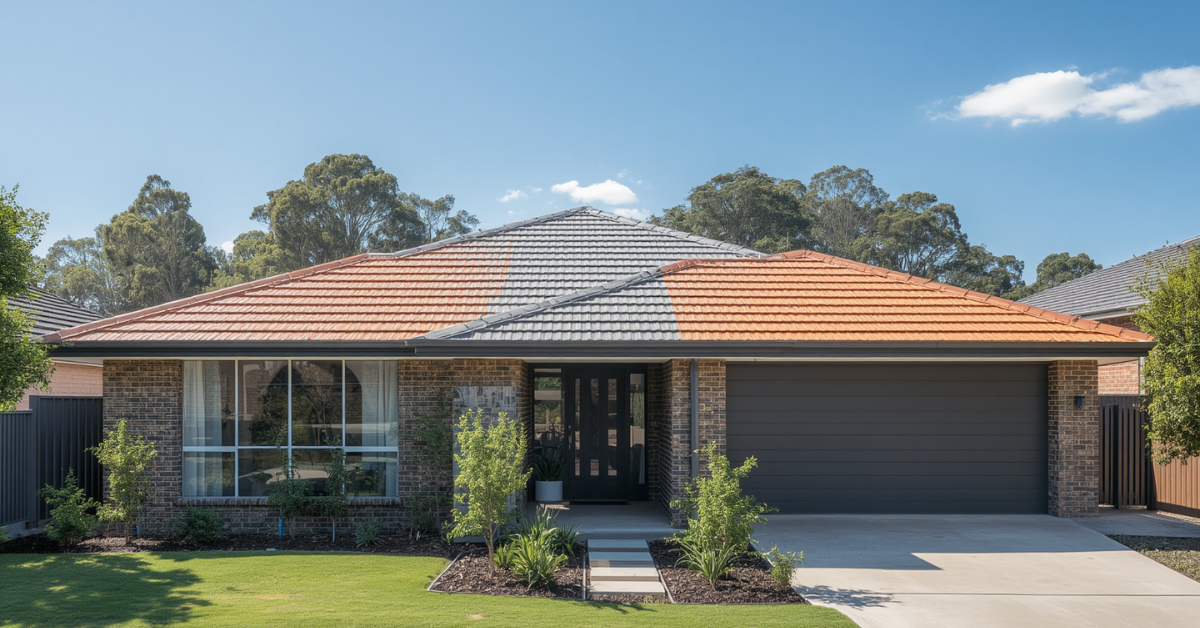

Summer in South-West Sydney is no joke. Condell Park and Bankstown regularly hit 38 to 42 degrees Celsius during heatwaves, and a dark-coloured metal or tile roof absorbs a significant portion of that heat and transfers it directly into your ceiling space. Heat-reflective roof paint is marketed as a solution to this. But does it actually work, and is it worth the premium over standard roof paint?
How It Works
Conventional dark paint absorbs solar radiation and converts it to heat. Heat-reflective paint uses special infrared-reflective pigments that bounce back a significant proportion of solar radiation while appearing visually similar to standard colours. Infrared radiation accounts for about 52 per cent of solar energy, so reflecting it back means significantly less heat transfer into the roof structure. Sources: CSIRO Building Research
Some products also incorporate thermal emissivity technology, meaning absorbed heat is re-radiated back outward rather than conducted inward through the material.
What the Numbers Actually Show
Independent testing shows that heat-reflective coatings can reduce roof surface temperatures by 20 to 30 degrees Celsius compared to standard dark paint in direct sun. Sources: Cool Roof Rating Council Australia. If your ceiling space sits at 60 degrees on a 38-degree day with a standard dark roof, a quality heat-reflective coating could bring that down to 35 to 40 degrees. Your air conditioning system works less to maintain a comfortable interior — and your electricity bill reflects that difference over a season.
[ Screenshot: Thermal imaging comparison: roof temperature with standard vs reflective coating ]
Products Available in Australia
- Dulux Roof and Trim SolarReflective — uses titanium dioxide-based pigments with published Solar Reflectance Index (SRI) values
- Solver Roof Paint with Coolmax Technology — available through trade suppliers in Sydney
- James Hardie AcraTex Roof Membrane — commonly specified for commercial and industrial buildings
When comparing products, look for a published SRI value. Products with an SRI above 75 meet most recognised cool roof benchmarks.
Does the Colour Matter?
Heat-reflective technology is most effective in lighter colours, but modern formulations can achieve meaningful SRI values even in mid-tone colours. If you are planning a repaint anyway, choosing a lighter reflective colour over a traditional dark tile red or charcoal is one of the highest-value decisions you can make with no additional cost beyond the product choice.
Is the Premium Worth It?
Heat-reflective roof paints typically cost 15 to 30 per cent more than standard roof paint products. On a 200 square metre roof, that might be an additional $400 to $800 in materials. If the product reduces your summer cooling costs by even $200 per year — a conservative estimate in a South-West Sydney home that runs air conditioning through December to March — it pays for itself within two to four years across a paint job that should last 10 to 15 years.
Final Thoughts
Heat-reflective roof paint is worth it for homes in hot Sydney suburbs, particularly those with metal roofs or dark tile roofs and high summer air conditioning use. The physics and the numbers support the investment.
When planning a roof repaint, ask our roof painting team about reflective options. For a full cost overview, see our guide on how much roof painting costs in Sydney.